17/02/2014

On Reading, Part One

I don’t know if I’ve come across an author whose delight is language and in words is as obvious and tangible as Anthony Burgess’. 
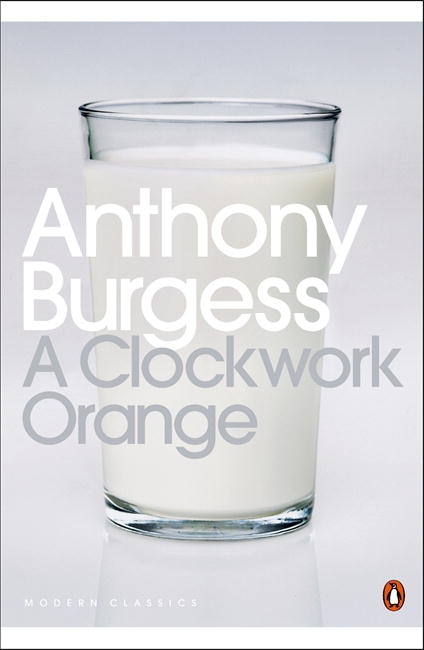
I bought A Clockwork Orange years ago, before I knew anything really about it. I tried to read it for a class I did at uni and didn’t get it at all; I tried again two years later and sped through it, devouring it hungrily like a madman. I loved the way he combined fragments of existing languages, made up his own words, played with the words themselves and their syllables, broke them down and rhapsodised upon a theme of language. There was also the allure of a good bit of Beethoven (or ‘Lovely Ludwig Van’ as Alex likes to call him) and the superawesome cover.

16/02/2014

Absolutely Beethoven

Absolutely Beethoven
Sydney Symphony Orchestra, conducted by David Robertson
Opera House Concert Hall, February 14

I’ve always said I never really started listening to music until I was fifteen. It’s not as ridiculous a claim as it sounds. Simply, before then I listened to commercial radio stations, whatever was on, and didn’t really develop any kind of taste or personal predilection for any one song over another. Sure, the first CD I bought was The Cat Empire which is cool enough, permissible even, and growing up mum and dad preferred classical music to anything else, but I never really knew what music was, what it could do, what it was capable of. In 2005, I very quickly learnt what music was, when my best friend introduced me to Holst’s The Planets. In a matter of minutes – well, as soon as Marsfamous swirling strings and thundering ostinato hurtled from the speakers – I knew this was something worth listening to, was worth sitting up and taking notice of. Some years later, he leant me a boxed set of Beethoven’s symphonies, and it was like that moment with Mars all over again. I knew, of course, Beethoven’s Fifth, and the ‘Ode of Joy’ from his Ninth, but not much more than that. (It was later that year that I discovered The Beatles, but that’s another story.)
*
Enter, then, the Sydney Symphony Orchestra and their new chief conductor, David Robertson. Renowned for his warmth and rapport with an orchestra, as well as his advocacy for music as a vital part of a healthy upbringing and education as much as for his conducting, Robertson’s Beethoven season could only be nothing short of incredible. I count the Seventh symphony among my favourite pieces of music, and I leapt at the chance to see this, his inaugural concert with the Sydney Symphony Orchestra in his new position as Chief Conductor. I was not disappointed. I’ve seen the Seventh symphony performed once or twice before, but never before have I heard – or is that seen? I’ve never been able to work out if you go to hear or see and orchestra; do they play or perform? – never before have I heard it played like this. There was a crispness to it, a freshness and a vibrancy, a fierce and robust richness to it that confirmed why it is such an incredible piece of music.

13/02/2014

Brechtaking: Belvoir’s Once In Royal David’s City

A new play is always something to look forward to. Griffin Theatre Company knows this, and has made it their mission to be Australia’s new writing theatre. Back in 1986, Griffin produced Michael Gow’s (third) play Away; a critical and popular success, it quickly became Australia’s most produced play as well as a mainstay of English syllabuses across the country. Now, twenty-eight years later, Eamon Flack is directing Gow’s latest play, Once In Royal David’s City for Belvoir.
Billed as “eloquent, playful, big-thinking, tender and fierce … an astonishing act of theatrical invention,” it sounds like it should be the next Babyteeth (also directed by Flack for Belvoir). But a strange thing happens to Gow’s play, when it is taken off the page and put on its feet, when it is spoken and acted. On the page, it is very dialogue-heavy which all theatre is by default. But on its feet, it is very much the Will Drummond show, almost an uninterrupted one-hundred-minute monologue, in which the other characters (actors?) are merely pawns in his chess game, tools to help him tell his story.

12/02/2014

Theatre of war: STC's The Long Way Home

While the physical results of war, of being involved in war, are sometimes easy to notice, the psychological and emotional results are not. Often going undetected, they can make the transition from serving in the military to civilian life hard, for both the returned soldiers and their families. As part of the rehabilitation process, the Australian Defence Force (ADF) and Sydney Theatre Company have joined forces to stage The Long Way Home, a kind of theatrical collage of scenes, anecdotes, video snippets and excerpts from life.
Written by Daniel Keene and directed by Stephen Rayne, The Long Way Home is not quite verbatim theatre, nor is it a theatrical documentary, as we have seen previously in Belvoir’s Beautiful One Day or Coranderrk, say. Rather, as Keene writes in the program, “every situation that it presents and every line of dialogue is born out of the experiences of the soldiers who will perform the play. They play themselves reimagined.” It’s a bold move, and rightly so, as all involved are acutely aware that you cannot replicate wars or ‘real life’ on stage. “The theatre is the perfect place for this kind of meeting,” Keene continues, “a place where truth and fiction can co-exist, where reality can be imagined.”

10/02/2014

THE LOST REVIEW

When I started this blog in 2012, the first production I reviewed was Belvoir's production of Rita Kalnejais' Babyteeth. At the time, I was wary of spoiling the production, was unsure how to write a review as such (even though I'd read countless others in the papers), and it was very much a half-baked piece of writing. And it's always struck me as the one piece on this blog that I'd most like to change, would most like to rewrite if I had the chance. So, two years later, here I am. 

26/01/2014

Light on the Hill: Reflections on a cultural history

While everybody’s proudly displaying the flag and eating damper and lamingtons, racing ferries up and down the harbour, hurling frozen chooks at Watson’s Bay, celebrating en-masse two-hundred and twenty-six years of nationhood (or one-hundred and fourteen and a bit, if you’re being pedantic), I’ve put together a list of a cross-section of books, films and pieces of music which encapsulate what my Australia is, how I see the nation and our chequered history.

Death becomes them: Sydney Festival & Belvoir’s Oedipus Schmoedipus

A disclaimer in the Belvoir foyer warns patrons that “this production contains all the bells and whistles including the use of loud noises, graphic violence and loads and loads of blood.” While early reviews did not quite know what to make of this production, it is safe to say that none of it is ever truly serious. Especially not in the hands of collective theatre group post who “take being silly very seriously.”
Oedipus Schmoedipus is a smorgasbord of over the top deaths and an outrageous amount of stage blood (all within the first ten minutes of the show). There are deaths by gunshot, knives, long-sword, cutthroat razor, throat slitting, and bomb, while various appendages are lopped with relish and groans of barely-disguised enjoyment. After this opening barrage of deaths, the stage is cleaned in a ballet-like effort by the stage management team, and the curtain is pulled back to reveal The Volunteers, post’s (not-so) secret ingredient in their madcap shenanigans. What follows is a forum about death, delivered by Mish Grigor and Zoë Coombs Marr with occasional interjections from the volunteers who follow prompts on screens set in the lighting rig. One carefully chosen-at-random volunteer enters and dies – in this performance, she sits on the ground, coughs once, then lies on the floor, playing dead. “What is that?” asks Coombs Marr. “What is that? What is that?” Her disappointment is only short-lived, as she and Grigor pun and non-sequitur their way around the often-taboo subject of death, dying, carking it, falling off the perch, kicking the bucket, meeting their maker, and various other euphemisms. Underneath the anarchy, the coordinated (and sometimes choreographed) chaos and the uncooperative backdrops, is a poignant and often quite unexpectedly frank discussion of how we all know it’s coming, sooner or later, one way or another, but we have no idea how or when, so we might as well enjoy those presented on stage in the meantime.

Red heart: Sydney Festival & Malthouse’s The Shadow King

“The greatest of all epics about nation, is finally an epic about our nation,” proclaims the promotional material for Sydney Festival’s presentation of The Shadow King, and there is much in this production to recognise, in both the Aboriginal nation and in the ‘white’ Australia. The first thing you notice when you enter the space at Carriageworks, is the red earth, a vivid orange only amplified by the lights. To one side sit a rock band – guitars, Hammond organ, didgeridoo – while the middle of the space is dominated by a marvellous overbearing metal evocation of a gargantuan mining truck which turns and slides forward, mechanised and invasive; violating the red sacred earth.
Directed by Michael Kantor from an idea by himself and Tom E. Lewis (who plays Lear), it follows much the same progression as Shakespeare’s text. It too is about familial conflict, power, land and entitlement; about learning humility, learning how to see when you are blind. Originally presented by Melbourne’s Malthouse Theatre in 2013, we are introduced at the outset to the Fool (Kamahi Djordon King), who serves as a framing device for the telling of the story, all at once part of it and outside of it, a bit like a spiritual songman, drawing past present and future together. Eschewing Shakespeare’s iambic pentameter in favour of a contemporary translation workshopped by the cast in several local Aboriginal languages, the core of the story is never lost in translation, nor do you need subtitles; the language is just as expressive and direct as Shakespeare’s, and when spoken from the red earth, it breathes with a new life and vitality.

24/01/2014

Hip-hOpthello: Sydney Festival’s Othello: The Remix

I’ve never had the opportunity to study Othello, either at school or at university. In fact, my first knowledge of the play came when I saw the Reduced Shakespeare Company’s The Complete Works of William Shakespeare [Abridged] (in which all thirty-seven plays are performed in ninety-seven minutes) when I was twelve. Apart from teaching myself Hamlet’s ‘To Be’ soliloquy backwards, and their glorious conflation of the Comedies, the only thing I remember from it is their Othello Rap. Enter, then, Sydney Festival’s presentation of Othello: The Remix, by the Chicago Shakespeare Theatre in an Australian exclusive. Not only is it, like the Reduced Shakespeare Company’s song, surprisingly accurate, but it too is enormous fun and is something of a masterstroke.

19/01/2014

Lest we forget: Sydney Festival’s Black Diggers

Every so often a theatre production stands head and shoulders above everything else, a production that stands out as a landmark event because of its social and cultural significance, because of it’s bearing on the shaping of Australia’s national psyche. Sydney Theatre Company’s The Secret River was perhaps such a production. Now, a year later, Sydney Festival and Queensland Theatre Company, in association with the Balnaves Foundation, present Black Diggers, an ambitious and monumentally affecting production which shines a long-overdue light on the contribution of Aboriginal soldiers in the Great War.
Like The Secret River, Black Diggers comes at a time when we, as a nation, must face the past and learn from it, when we must acknowledge the contribution people have played in the shaping of the country we know today. Directed by Wesley Enoch, we follow the stories of several archetypal figures as they travel from their homelands to the battlefields of Gallipoli, the Middle East, and the Western Front. Far from being jingoistic or representative, the result is an engrossing, harrowing and emotionally charged one-hundred minutes of unavoidably powerful theatre that does not shy away from the ugly truths of war and its legacy.