14/03/2014

Dreams are toys: Bell Shakespeare's The Winter's Tale

Written late in his career, Shakespeare’s The Winter’s Tale is perhaps one of the stranger of his plays to wrap your head around. Essentially comprising of two very disparate genres – heightened tragedy c. Othello, and bawdy pastoral comedy c. As You Like It – it, today, works on an emotional level more than a dramatic level, and pushes the boundaries of what is possible on stage, both in the Elizabethan theatres and on contemporary stages. Deriving its title from the Elizabethan storytelling mode reminiscent of a fairytale, The Winter’s Tale is classified as one of the Romances by twenty-first century critics. While the term ‘Romance’ derives from the Greek stories from the second and third centuries AD, these stories were, for the Elizabethan and Jacobean audiences, merely continuations in a rich vein of storytelling; usually episodic, they utilised the processional ‘quest’ motif, and generally involved perilous journeys and final (impossible) recognitions and reunions.
Presented here by Bell Shakespeare, The Winter’s Tale is one of Shakespeare’s less performed plays throughout the world, perhaps because of its stylistic confusion. Directed with warmth and colour by John Bell, this production is enchantingly set inside a child’s bedroom, that of Mamillius, the son of Leontes, King of Sicily. Created out of white curtains, a white bed, and white floor, the austerity and winteriness of its design gives way to gorgeous washes of colour, deep blues and purples, vibrant pinks and yellows and ceruleans. The story unfolds very much from Mamillius’ point of view, yet for all its ingenuity and enchanting cleverness, something doesn’t quite sit right with this production.

09/03/2014

It's about love: STCSA's The Seagull

It was about ideas. Big ideas.
What every play should be about.
 – Dorn

In a letter to a friend in 1895, Chekhov famously described the play he was working on as “a comedy – three f., six m., four acts, a landscape (a view of a lake), much conversation about literature, little action, and five tons of love.” While it is a rather simplistic reduction of the play, it is nonetheless quite a succinct summary. If you were to examine the play, peel back its layers and try to get inside each of Chekhov’s characters, you’d find that ultimately it’s a play about love in all its different guises; at the same time, however, in true Chekhovian fashion, it’s not particularly ‘about’ any one thing, except perhaps Life.
The play was, of course, The Seagull, and like the best works of literature, it transcends the centuries and is still as fresh and bold and groundbreaking as the day it was first performed. And, like the classics, every so often a production comes along that cuts to the very heart of what it is about that you cannot help but be struck by its beauty, elegance and rawness. For me, that production was the State Theatre Company of South Australia’s The Seagull, presented as part of the Adelaide Festival.

07/03/2014

In the hood: Windmill's Fugitive

I grew up with the Robin Hood story (frankly, which kid didn’t?). I love its big epic tale of heroics and bravery, courage, action, romance and the ending which is only really the beginning. And it’s not hard to see why it’s such a good story, why it has lasted so long. It’s one of those stories which is both extremely simple and complex at the same time, a kind of two-way mirror or a kind of kaleidoscope that twists and magnifies the more you look at it. It’s about brigands and outlaws fighting injustice; it’s about social injustice and looking after the people who’ve fallen through the cracks in society for one reason or another; it’s about fighting for the underdog and standing up to those in charge, asking people ‘will you tolerate this?’ Yet, it’s a Romance, in the tradition of the quest stories from antiquity, the same essential story as that of King Arthur, another greatly mythologised figure.
Matthew Whittet’s Fugitive, playing at the Adelaide Festival as part of Windmill Theatre’s trilogy of rites-of-passage stories, is a comic-book fantasy hip-hop romp through a near-future dystopia. “The leaders have disappeared,” we are told. “It’s every man for himself. In the fog of his urban chaos, a young man returns. A guy with strange power and a backpack of destruction.” His name, like that of his legendary counterpart, is Robin. And he’s here to help.

04/03/2014

Caught by grace: Griffin's Jump For Jordan

Like an archaeological dig site, a mound of sand intrudes upon Griffin’s corner stage, bursting through a window, cascading downwards onto the sandy carpet. Through the window, a garden, dark leafy foliage. And inside the house? Well, there’s an argument going on, an argument perfected and cemented over time, and we’re thrust headfirst into the world of Sophie, a twenty-something archaeology student, her “mad Arab” family and her girlfriend Sam. There is no question of where we are, familially-speaking, and as the play’s ninety-odd minutes unfold before us, we shift backwards and forwards through time, through memories and stories, half-truths and disguises, dreams, sleepless nights; family history, anxious projections and conversations with people who can’t be there anymore.
Donna Abela’s Jump For Jordan won the 2013 Griffin Award, and is presented here in its premiere production in conjunction with the Sydney Mardi Gras by Griffin Theatre Company. As described in the script’s notes, “the scenes in the play are often constructed of layers of narrative that collapse in on each other... Attention must be on context as well as content. The borders between scenes are intended to be porous.” To use the archaeological metaphor again (it is apt, after all), Abela’s play digs through several layers of accumulated strata, sifting fact from fiction, family stories from emotions and reality, and the result is a beautiful and moving exploration of identity, culture and relationships, both romantic and familial, and trying to reconcile all the disparate elements of your life with one another.

01/03/2014

Keep calm and Carry On: STC's Noises Off

Playing farce is a dangerous business. Not only is the timing and hitting of marks crucial, but physicality is also a key element in the success of a piece. In a way, farce largely depends upon an audience’s knowing of things that the characters do not. “We know the vicar is behind the door, but the ingénue does not. We know why she’s in her underwear and the husband’s trousers have fallen down but his affronted wife does not,” writes Jonathan Biggins in the play’s program. Enter then, Noises Off, Michael Frayn’s seminal farce – nay, play – about a “third-rate production of a creaky bedroom farce” called ‘Nothing On’ as played by a less than fourth-rate troupe of actors. I say play because the plotting and precision of the writing is pure Stoppard, the collision of art-imitating-life is Pirandello’s, the characters’ awareness of a curtain that will never fall is Beckett’s. Yet for all its double entendres and mishaps, there lies at its heart the very real dilemma of not knowing your next line, your next entrance, your next move, and in that way it is very much like life – we never really know what (or, perhaps, who) is coming through the door next.
Staged in three acts, Act One depicts the final rehearsal before opening night (the first time they have ever run the show through head to tail in one go). Act Two is the production seen from backstage, four weeks into a national (regional?) tour (and played mostly in actions, “looks and gestures”), while Act Three is the production on its final night in Stockton-on-Tees, the last leg of the tour, and indeed on its last legs. It’s all a bit Groundhog Day in a way, the way we see the same one-act’s action played over and again, but with increasing variation and divergence from the prompt-book.

17/02/2014

On Reading, Part One

I don’t know if I’ve come across an author whose delight is language and in words is as obvious and tangible as Anthony Burgess’. 
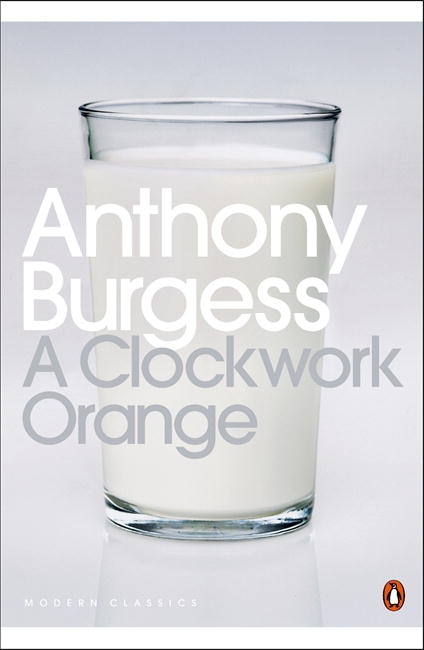
I bought A Clockwork Orange years ago, before I knew anything really about it. I tried to read it for a class I did at uni and didn’t get it at all; I tried again two years later and sped through it, devouring it hungrily like a madman. I loved the way he combined fragments of existing languages, made up his own words, played with the words themselves and their syllables, broke them down and rhapsodised upon a theme of language. There was also the allure of a good bit of Beethoven (or ‘Lovely Ludwig Van’ as Alex likes to call him) and the superawesome cover.

16/02/2014

Absolutely Beethoven

Absolutely Beethoven
Sydney Symphony Orchestra, conducted by David Robertson
Opera House Concert Hall, February 14

I’ve always said I never really started listening to music until I was fifteen. It’s not as ridiculous a claim as it sounds. Simply, before then I listened to commercial radio stations, whatever was on, and didn’t really develop any kind of taste or personal predilection for any one song over another. Sure, the first CD I bought was The Cat Empire which is cool enough, permissible even, and growing up mum and dad preferred classical music to anything else, but I never really knew what music was, what it could do, what it was capable of. In 2005, I very quickly learnt what music was, when my best friend introduced me to Holst’s The Planets. In a matter of minutes – well, as soon as Marsfamous swirling strings and thundering ostinato hurtled from the speakers – I knew this was something worth listening to, was worth sitting up and taking notice of. Some years later, he leant me a boxed set of Beethoven’s symphonies, and it was like that moment with Mars all over again. I knew, of course, Beethoven’s Fifth, and the ‘Ode of Joy’ from his Ninth, but not much more than that. (It was later that year that I discovered The Beatles, but that’s another story.)
*
Enter, then, the Sydney Symphony Orchestra and their new chief conductor, David Robertson. Renowned for his warmth and rapport with an orchestra, as well as his advocacy for music as a vital part of a healthy upbringing and education as much as for his conducting, Robertson’s Beethoven season could only be nothing short of incredible. I count the Seventh symphony among my favourite pieces of music, and I leapt at the chance to see this, his inaugural concert with the Sydney Symphony Orchestra in his new position as Chief Conductor. I was not disappointed. I’ve seen the Seventh symphony performed once or twice before, but never before have I heard – or is that seen? I’ve never been able to work out if you go to hear or see and orchestra; do they play or perform? – never before have I heard it played like this. There was a crispness to it, a freshness and a vibrancy, a fierce and robust richness to it that confirmed why it is such an incredible piece of music.

13/02/2014

Brechtaking: Belvoir’s Once In Royal David’s City

A new play is always something to look forward to. Griffin Theatre Company knows this, and has made it their mission to be Australia’s new writing theatre. Back in 1986, Griffin produced Michael Gow’s (third) play Away; a critical and popular success, it quickly became Australia’s most produced play as well as a mainstay of English syllabuses across the country. Now, twenty-eight years later, Eamon Flack is directing Gow’s latest play, Once In Royal David’s City for Belvoir.
Billed as “eloquent, playful, big-thinking, tender and fierce … an astonishing act of theatrical invention,” it sounds like it should be the next Babyteeth (also directed by Flack for Belvoir). But a strange thing happens to Gow’s play, when it is taken off the page and put on its feet, when it is spoken and acted. On the page, it is very dialogue-heavy which all theatre is by default. But on its feet, it is very much the Will Drummond show, almost an uninterrupted one-hundred-minute monologue, in which the other characters (actors?) are merely pawns in his chess game, tools to help him tell his story.

12/02/2014

Theatre of war: STC's The Long Way Home

While the physical results of war, of being involved in war, are sometimes easy to notice, the psychological and emotional results are not. Often going undetected, they can make the transition from serving in the military to civilian life hard, for both the returned soldiers and their families. As part of the rehabilitation process, the Australian Defence Force (ADF) and Sydney Theatre Company have joined forces to stage The Long Way Home, a kind of theatrical collage of scenes, anecdotes, video snippets and excerpts from life.
Written by Daniel Keene and directed by Stephen Rayne, The Long Way Home is not quite verbatim theatre, nor is it a theatrical documentary, as we have seen previously in Belvoir’s Beautiful One Day or Coranderrk, say. Rather, as Keene writes in the program, “every situation that it presents and every line of dialogue is born out of the experiences of the soldiers who will perform the play. They play themselves reimagined.” It’s a bold move, and rightly so, as all involved are acutely aware that you cannot replicate wars or ‘real life’ on stage. “The theatre is the perfect place for this kind of meeting,” Keene continues, “a place where truth and fiction can co-exist, where reality can be imagined.”

10/02/2014

THE LOST REVIEW

When I started this blog in 2012, the first production I reviewed was Belvoir's production of Rita Kalnejais' Babyteeth. At the time, I was wary of spoiling the production, was unsure how to write a review as such (even though I'd read countless others in the papers), and it was very much a half-baked piece of writing. And it's always struck me as the one piece on this blog that I'd most like to change, would most like to rewrite if I had the chance. So, two years later, here I am.